
Here's What Nollywood is Missing - Lessons on Market Expansion
GROWTH IQ: Product & Market Expansion II

On December 27, 1996, Marvel Entertainment filed for bankruptcy.
The same company that created Spider-Man, the X-Men, the Hulk, Captain America went $610 million in debt.
Their stock price crashed from $35.75 to $2.38, and they had to lay off one-third of employees.
But their business wasn’t dying from poor characters, it was a series of bad business decisions and expansion models.
Now fast forward to 2009 when Disney buys Marvel for $4 billion.
And 10 years after that, Avengers: Endgame becomes the highest-grossing film of all time, shipping nearly $2.8 billion worldwide.
By 2025, the Marvel Cinematic Universe has generated over $30 billion globally.
So, what happened?
So, what Killed Marvel?
In the early 1990s, Marvel was making money loads of money from comic books.
They started churning out different characters.
They just kept releasing them and sales was exploding.
It was some giant bubble.
Then the bubble burst.
Between '93 and ‘96, revenue collapsed.
They had expanded and done some bad acquisitions that left them in debt.
They bought a trading card company and a distribution business that both failed.
But the mistake wasn’t the diversification.
The mistake was that this diversification was UNFOCUSED.
They tried to be everything: comics, trading cards, even restaurants (yes “Marvel Mania” opened in 1998 and closed within a year), toys, random acquisitions.
They chased the money instead of building a system (money wey be wind).
How they survived
In 1999, Peter Cuneo took over as CEO, and the first thing he did was to cut everything that wasn’t core business.
All those funny restaurants were gone.
They now focused on characters
And by then, Marvel had 8,000 characters.
EIGHT THOUSAND.
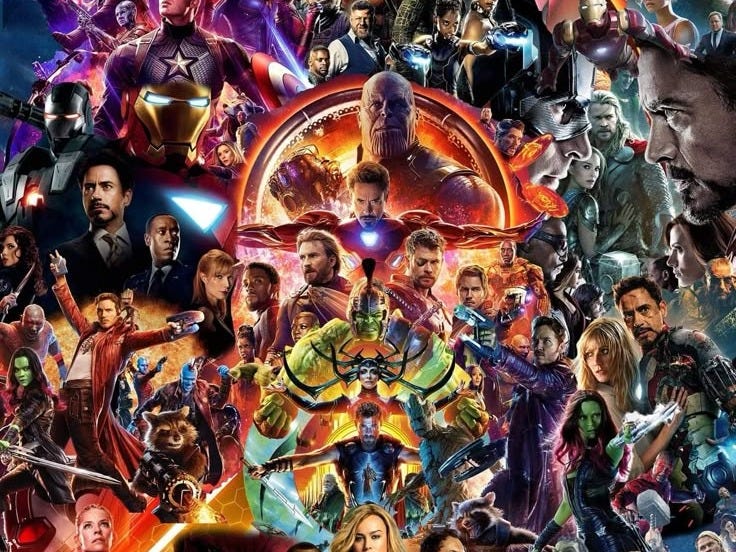
Where most companies would kill for 10 good characters.
They stopped trying to sell comic books to speculators and started asking how to turn these characters into assets.
But they didn’t even have the money to do that so, in 2005, they secured a $525 million loan from Merrill Lynch.
But here’s the crazy part.
That loan was backed by the movie rights to 10 characters including Iron Man, Captain America, Thor, and The Avengers.
If the movies flopped, Marvel would lose the rights to those characters forever.
The bank would own Spider-Man, Iron Man, and the likes.
Luckily, it worked.
In 2008, Iron Man was released and grossed $585 million worldwide.
And so, the Marvel Cinematic Universe was born.
But people tend to miss this part.
Marvel didn’t just make some good one-off movies.
They interconnected them into a universe where every movie leads to another one.
Iron Man led to The Avengers. The Avengers led to Civil War. Civil War led to Infinity War.
Now, you can’t just watch one. You have to watch them all.
And the system made Marvel invincible.
Now Let’s Talk About Nollywood
Nollywood is the second-largest film industry in the world by volume.
We put out over 2,000 films per year.
And that’s bigger than Hollywood in output (you’re in doubt? Check it out quickly!).
But output is not the same as impact.
Nollywood has spent 30 years proving it can make movies.
It started with Living in Bondage in 1992, sold on VHS tapes for ₦500,000 budget, and the movie exploded across Nigeria.
By the 2000s, Nollywood films were everywhere. They were sold in markets, rented at video shops, and watched in every home.
Now, that’s the first step: Hustle and volume.
Then came step 2, which is Streaming and global distribution.
Netflix and Amazon Prime arrived. Suddenly, Nigerian films like King of Boys and Blood Sisters were being watched all over the world.
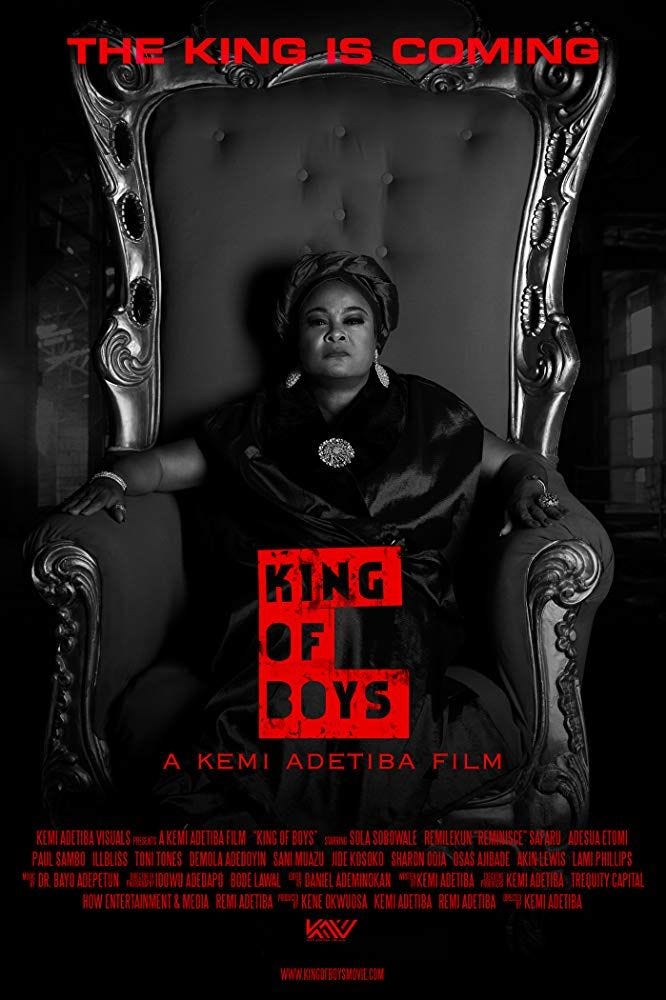
Nollywood went global, the quality improved greatly, and so did the budget.
Filmmakers like Kemi Adetiba, Kunle Afolayan, Funke Akindele, and Mo Abudu became household names in the industry.
But here’s our problem
Nollywood still hasn’t built the SYSTEM.
The Nollywood Problem
Nollywood makes individual hits.
However, it doesn’t build franchises.
Marvel made 33 films in the MCU between 2008 and 2025, and they ALL connect.
You can’t understand Endgame without watching Infinity War.
And you can’t understand Infinity War without watching 18 other films first.
When people paid to see Endgame, they paid to see the conclusion of a 10-year story.
Whereas Nollywood makes ONE great film… and then moves on.
King of Boys was brilliant. Then we got King of Boys: The Return of the King three years later.
Great. That’s a start, but that’s just TWO films.
Blood Sisters was Netflix’s most-watched Nigerian show in 2022, and it ended on a cliffhanger.
4 years later, there’s still no Season 2.
Shanty Town came. We watched it, now we’ve forgotten.
We’re still thinking in EPISODES and ONE-OFFS instead of in ECOSYSTEMS.
In 2025, Nigerian box office revenue hit ₦20 billion.
But most of that revenue still came from Hollywood blockbusters.
Mufasa: The Lion King alone made ₦618 million in Q1 2025 alone in Nigeria.
Just imagine that one foreign movie made more than most Nigerian films COMBINED.
Why?
Because Disney built a franchise.
The Lion King (1994) led to The Lion King (2019) and this also led to Mufasa (2025).
They told the same story differently for three decades and sold it.
Now, that’s a system.
What Nollywood Can Learn from Marvel’s Resurrection
Lesson 1: We should stop chasing output and start building sequels, prequels, and spin-offs.
Marvel took 10 characters and stretched them into 33 interconnected films over 17 years.
Nollywood has hundreds of characters worth revisiting. Saro from King of Boys, Aníkúlápó, the women from Glamour Girls, the Johnsons from the TV series.
I mean, why are we inventing new characters every year instead of deepening the ones people already love?
The math is simple: One franchise with five films will make more money than five disconnected films.
Because people already know the storyline, so they don’t sweat it. And sequels also make people revisit prequels.
Lesson 2: We should grow to owning our own distribution.
Marvel licensed Spiderman to Sony.
But didn’t just license Spider-Man to Sony forever and hope for the best.
They fought to get the rights back and then built Marvel Studios so they could control their own stories, their own budgets, and their own revenue.
Nollywood is FINALLY starting to understand this.
Kava launched in 2025 (and I know many of us don’t know what that is).
For those who don’t know, Kava is a streaming platform built specifically for Nollywood and African content by Inkblot Studios and Filmhouse Group.
Now that the start of ownership.
But we need more.
We need filmmakers who’ll stop waiting for Netflix to “pick them” and start building platforms that put Nigerian films first.
Lesson 3: And I think this is probably the most important - WE SHOULD BUILD FOR REWATCH.
Marvel movies are designed to be watched multiple times.
But Nollywood films are designed to be watched ONCE.
We reveal the plot twist, peak the drama, and the movie ends.
So, what’s there to watch again?
If Nollywood wants to build billion-naira franchises, our films need to be built like puzzles with clues in the background, and characters who return.
Is Nollywood Building an Empire or Just Making Films?
That’s the question this whole article has been circling.
Marvel came back from bankruptcy because they built a connected universe.
Nollywood has the talent and audience.
But without a SYSTEM, everyone is just doing their hustle.
And hustle without infrastructure is just exhausting. You’ll need to start over with ideating movies and casts and all.
Every film should lead to another film. Every character should live in a universe (one that we’ll create.
Every movie should make people say, “I need to see what happens next.”
Right now, we’re just making great individual meals with nobody willing to build the restaurant.
And until someone does, we’ll keep watching movies like Mufasa outsell our own films in our own country.
What do you think? Is Nollywood building an empire or just making films? Tell me in the comments.
Com toda a humildade,
Precious Christopher
Marketing Psychology Analyst
Life and Marketing | Subscribe | Past Issues